


EPDM vs Neoprene vs Nitrile Rubber: Which Should You Choose?
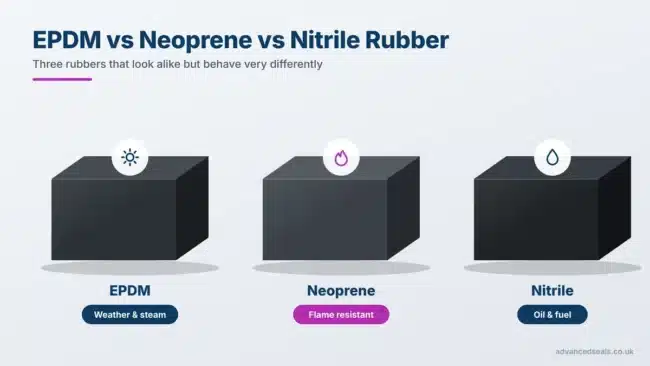
EPDM, neoprene and nitrile are the three rubbers we are asked about most. They can look identical on the bench: black, flexible and similar in hardness. Put them in the wrong place, though, and a seal that should last for years can swell, crack or harden within months.
The good news is that the choice is rarely difficult once you know what the part will be exposed to. This guide explains what each rubber is good at, where each one fails, and how to pick the right one for your seal, gasket or washer.
The short answer
Choose EPDM for outdoor use, weather, sunlight, hot water and steam. Keep it away from oil and fuel.
Choose nitrile for oil, fuel, grease and hydraulic fluid. Keep it out of direct sunlight and ozone.
Choose neoprene when you need a balance: moderate oil resistance, reasonable weather resistance and built-in flame resistance.
What is EPDM rubber?
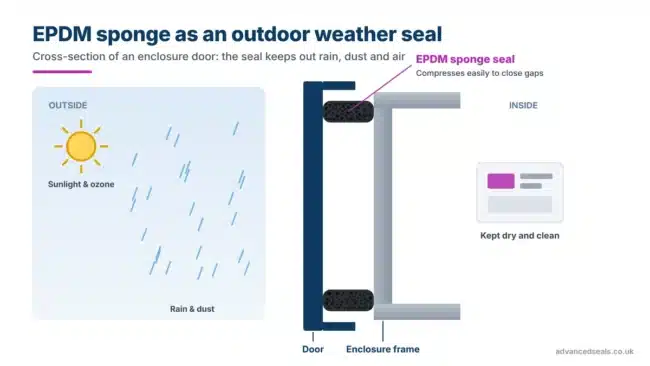
EPDM (ethylene propylene diene monomer) is a synthetic rubber built to live outdoors. Its structure makes it highly resistant to ozone, UV light and weathering, so it keeps its flexibility for years in conditions that crack most other rubbers.
EPDM is good for
- Outdoor seals exposed to rain, sunlight and changing temperatures
- Hot water and steam
- Many dilute acids and alkalis, and glycol-based fluids including glycol brake fluid
- Electrical insulation, which is why it is widely used for cable insulation
EPDM is not suitable for
- Mineral oils, petrol, diesel and grease. EPDM absorbs them, swells and loses its strength.
- Hydrocarbon solvents
Typical uses: door and window seals, roofing, outdoor electrical enclosures, HVAC units and water systems, including drinking water when an approved grade is used.
Explore our solid EPDM rubber, EPDM sponge and WRAS-approved solid EPDM.
What is neoprene rubber?
Neoprene is the best-known trade name for polychloroprene, often shortened to CR. It is the all-rounder of the three. It leads on flame resistance, is strong on wear, and sits in the middle on oil and weather resistance.
Neoprene is good for
- Moderate resistance to oils and greases
- Good ozone resistance and reasonable weather resistance
- Fresh water and sea water, which makes it popular for marine use
- Flame resistance. Neoprene is self-extinguishing, so it tends to stop burning once the flame is removed.
- Abrasion and wear
Neoprene is not suitable for
- Concentrated acids, ketones and aromatic solvents such as benzene and toluene
- Constant heavy oil contact, where nitrile performs better
- Long-term outdoor exposure where EPDM would last longer
Typical uses: marine fittings, HVAC, electrical enclosures, anti-vibration pads and applications where fire performance matters.
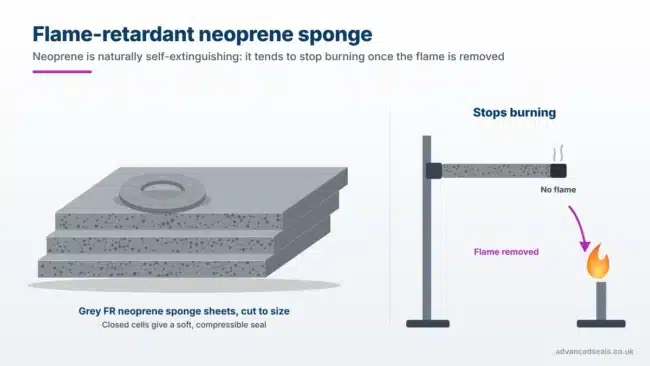
Explore our solid neoprene rubber, neoprene sponge, flame-retardant neoprene sponge and neoprene gaskets.
What is nitrile rubber?
Nitrile rubber (NBR, also called Buna-N) is made from acrylonitrile and butadiene. The acrylonitrile gives it outstanding resistance to oils and fuels, which is why it is one of the most common choices inside engines, gearboxes and hydraulic systems. The more acrylonitrile a grade contains, the better its oil resistance, but the less flexible it becomes in the cold.
Nitrile is good for
- Mineral oils, fuels, greases and hydraulic fluids. Modern fuels containing ethanol, such as E10 petrol, can be harder on standard nitrile, so fuel systems may need a high-acrylonitrile grade or FKM.
- Animal and vegetable oils and fats, so food-quality grades are common in food processing
- Abrasion and wear
Nitrile is not suitable for
- Sunlight, ozone and weathering. Unprotected nitrile can crack outdoors.
- Ketones, strong acids and glycol-based brake fluids
Typical uses: engine and gearbox gaskets, hydraulic seals, fuel handling, workshop equipment and food production lines.
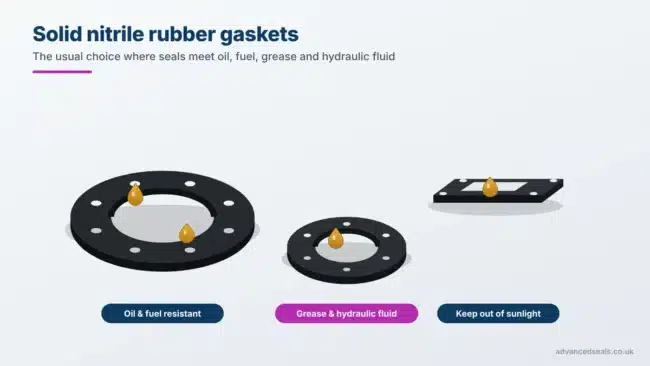
Explore our solid nitrile rubber and food-quality solid nitrile rubber.
EPDM vs neoprene vs nitrile: comparison table
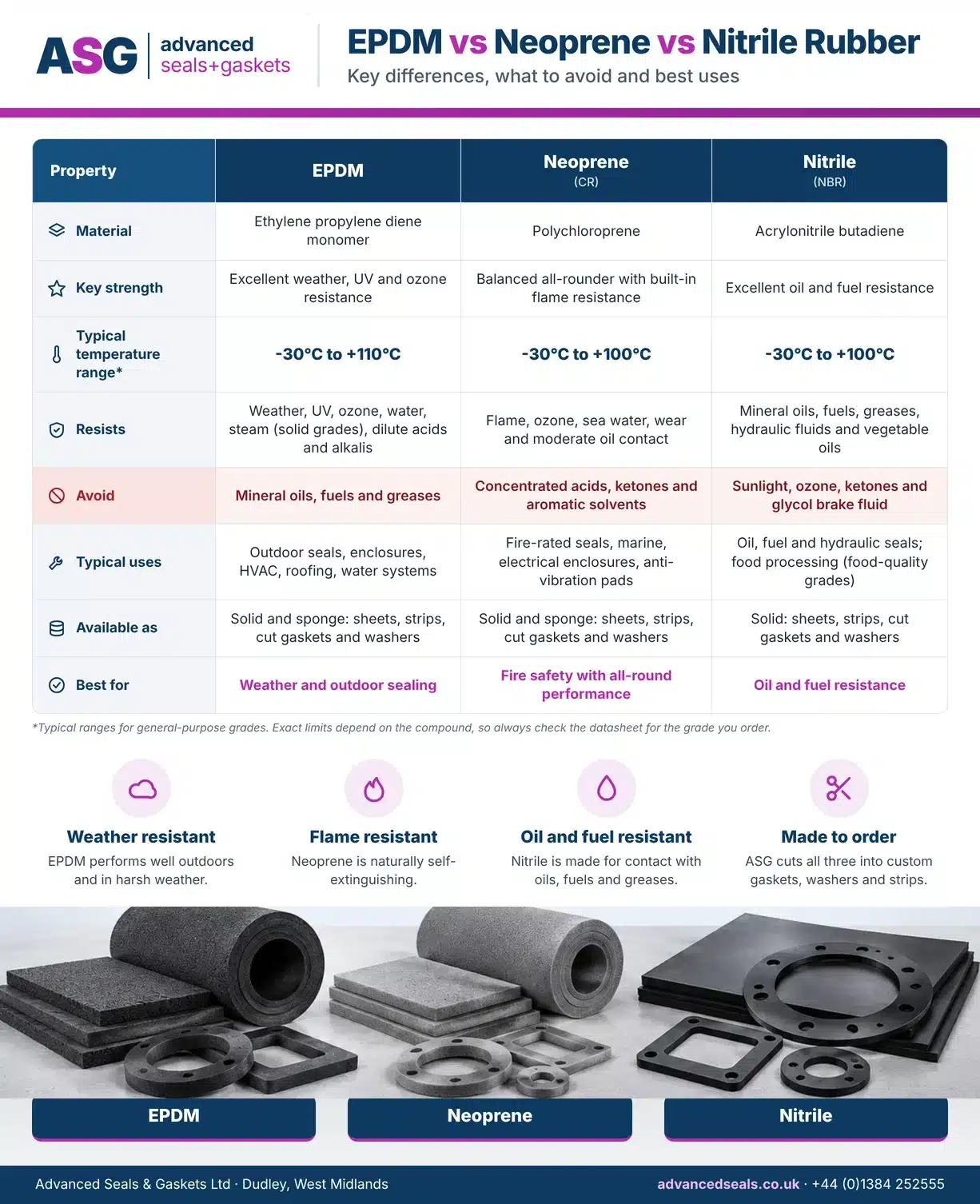
*Typical ranges for general-purpose grades. Exact limits depend on the compound, so always check the datasheet for the grade you are ordering.
How to choose the right rubber: four questions
- What will the rubber touch? This matters more than anything else. If there is oil, fuel or grease, rule out EPDM and look at nitrile, or neoprene for light contact. If it is water, steam or outdoor air, EPDM is usually the answer.
- Will it be outdoors or near ozone? Sunlight and ozone attack nitrile. Electric motors, arc welding equipment and UV lamps also produce ozone, so this can apply indoors too. Choose EPDM, or neoprene if some oil resistance is also needed.
- What temperatures will it see? All three cover normal working temperatures. For constant heat beyond the ranges in the table, consider silicone rubber for dry heat, or FKM (often sold as Viton) where heat and oil occur together. Silicone is only fair with hot oils and poor with fuels, so it is not the best choice where oil is present. For very low temperatures, silicone is usually the better choice.
- Are there rules to meet? Fire performance points towards neoprene or a flame-retardant grade. Products in contact with drinking water must meet the relevant water fittings regulations (England and Wales, Scotland and Northern Ireland each have their own), and WRAS approval is the usual way to show this. Food contact needs a food-quality grade.
Common mistakes to avoid
- Using EPDM near oil. This is one of the most common mistakes. EPDM absorbs mineral oil and fuel, then swells, softens and loses its seal.
- Using nitrile outdoors. Ozone attacks nitrile fastest where it is stretched, so cracks often appear across the stretched part of the seal.
- Choosing neoprene “just to be safe”. Neoprene is a sensible compromise, but if one exposure dominates, the specialist material will last longer.
- Ignoring cleaning chemicals. A seal may never see oil in use, yet be washed down with solvents every day. Include these in your checklist.
Solid or sponge?
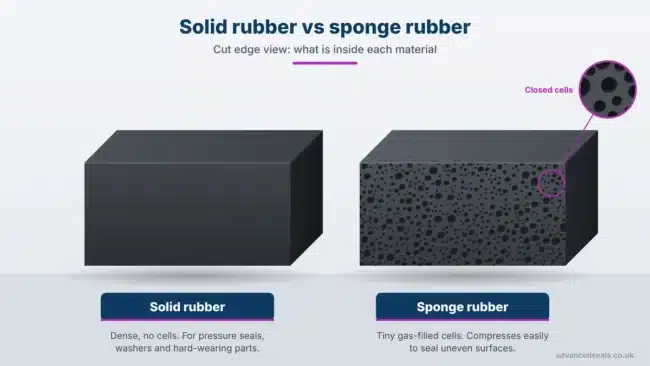
All three materials come in solid and sponge (cellular) forms. Solid rubber suits pressure seals, washers and parts that must resist wear. Sponge rubber compresses easily, so it seals uneven surfaces with low closing force, which is ideal for enclosures, doors and panels. See our solid rubber and sponge rubber ranges.
Frequently asked questions
Is neoprene the same as EPDM?
No. They are different synthetic rubbers. EPDM has better weather and steam resistance, while neoprene has better oil and flame resistance.
Which rubber is best for outdoor use?
EPDM. Its resistance to UV, ozone and weathering makes it the standard choice for outdoor seals.
Which rubber is most resistant to oil?
Nitrile. Neoprene offers moderate oil resistance, and EPDM should not be used with oils or fuels.
Can EPDM be used with diesel or petrol?
No. Diesel and petrol cause EPDM to swell and weaken. Use nitrile instead.
What is Buna-N?
Buna-N is another name for nitrile rubber (NBR).
Which rubber can be used with drinking water?
EPDM is widely used with drinking water. In the UK, materials in contact with drinking water must meet the relevant water fittings regulations, and WRAS approval is the usual way to prove it. We supply WRAS-approved solid EPDM.
Still not sure? Ask us
If your part faces a mix of oil, weather and heat, the right answer may be a special grade or a different material altogether. Tell us what the part will be exposed to, its working temperature and any standards it must meet, and our team will recommend the right rubber. We manufacture seals, gaskets and washers in all three materials at our works in Dudley.
Contact us or call +44 (0)1384 252555 to discuss your application.