


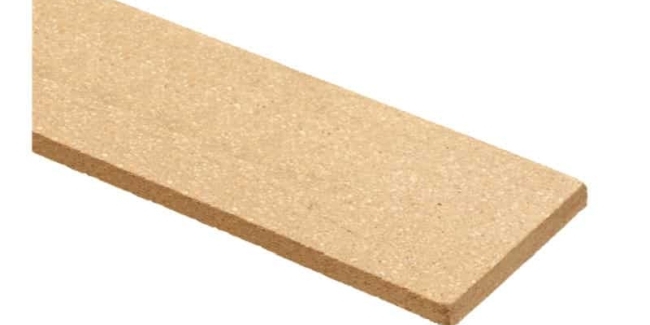
Anti-Vibration Cork Strip
Advanced Seals & Gaskets Ltd is a leading supplier of high-quality strip materials, including a wide range of cork products. Among our offerings, anti-vibration cork strips are a versatile solution for reducing noise, vibration, and movement in machinery and equipment.
Cork naturally possesses anti-vibration properties, but the performance of each grade depends on the specific application and environmental exposures, such as temperature ranges, fuels, oils, and certain chemicals.
Our cork rolls are manufactured in various thicknesses and supplied in standard sizes of 1 metre wide by 10 metres long. Using our in-house bandsaws, strippers, log cutters, and presses, we can convert these rolls into custom strips of any size to suit your project requirements.
During the conversion process, we can laminate multiple layers of cork to increase thickness, apply self-adhesives or foils, or bond the cork to other materials for enhanced functionality.
What are Anti-Vibration Cork Strips?
All cork materials can help reduce vibration, but bonding cork with synthetic rubbers such as EPDM, Neoprene, Nitrile, or SBR enhances flexibility and provides resistance to oils, acids, and elevated temperatures.
Anti-vibration cork strips are typically compressed between two surfaces to fill gaps, acting like gaskets to seal against water, dust, oil, chemicals, and air leaks. This makes them ideal for applications where machinery or equipment generates high levels of vibration or movement.
Cork is manufactured in continuous rolls at specific thicknesses and can be cut into strips or sheets to meet the requirements of any industrial or engineering project.
Product Enquiry
For information on Anti-Vibration Cork Strip please complete the following quick enquiry or call us on +44(0)1384 252555.
Product Specification & Key Characteristics
- Colour: Natural (or black-speckled when bonded)
- Bonded Materials: Nitrile, Neoprene, Natural, Synthetic rubber
- Density: 0.56–0.70 g/cm³
- Resistances: Oils, fuels (nitrile bonded), sound suppression, water resistance
- Temperature Range: -20°C to +120°C
- Thickness: 0.8mm – 25mm (laminatable for greater thickness)
Complete technical data is available upon request or can be downloaded from our online portal.
Why use Anti-Vibration Cork Strips?
Anti-vibration cork strips are chosen for their combination of durability, flexibility, and functional properties. Cork is:
- Chemically inert
- Resistant to fungus and mould
- Flame retardant
- Anti-static
- Flexible and durable
These strips are primarily used to reduce vibration and noise generated by heavy machinery or equipment. Excessive vibration not only damages equipment and surrounding structures but also poses safety risks and contributes to hazardous noise levels.
Anti-vibration cork strips also provide:
- Stability to prevent machinery movement
- Thermal insulation
- Sealing against air, oil, and chemical leaks
Advantages of Using Anti-Vibration Cork Strip
We work with a network of material suppliers, enabling us to offer cork strips in a range of sizes, thicknesses, and grades. Our in-house stock ensures fast turnaround times for converted products and prompt delivery of full rolls.
Key advantages of cork strips include:
- Thermal insulation and vibration/noise absorption
- Sealing against air, oil, and chemical leaks
- Chemically inert, flame-retardant, and anti-static
- Flexible, durable, and easy to cut into strips
- Excellent adhesive retention and conformability to most surfaces
Benefits of Anti-Vibration Cork
- Superior sound and vibration dampening
- Thermal insulation properties
- Laminatable or bonded with other materials for specific applications
- Resistance to oils, chemicals, fuels, and acids (depending on cork grade)
- Enhances stability and reduces machinery movement
- Durable with excellent abrasion and friction resistance
Grade of Cork
ASG supplies a range of cork grades, each with unique properties suited to different industrial and engineering applications:
Resin-Bonded Cork: Lightweight and flexible, produced using cork granules bound with synthetic resin. Resistant to specific acids and ideal for water-retaining applications.
Nitrile-Bonded Cork: Cork is combined with nitrile rubber granules, giving a speckled appearance. Ideal for oil, fuel, and high-temperature resistant gaskets, commonly used in automotive and general engineering.
Natural Cork: Comprised of pure cork grains held together with a liquid binder. Cost-effective and suitable for seals, thermal insulation, acoustic, and anti-vibration applications.
Synthetic Cork (SBR): A combination of synthetic rubber and natural cork, offering high compressibility, flexibility, and resilience. Suitable for low to medium bolt pressures and often used in automotive, industrial, and construction noise-reduction applications.
Neoprene-Bonded Cork: Cork granules are combined with neoprene rubber to enhance temperature resistance and weathering protection, making them ideal for oil, electrical, engineering, and anti-vibration applications, as well as for soundproofing.
Please contact us using the form below or by calling us on +44(0)1384 252555.