


Viton (FKM) Rubber Explained: Properties, Uses and When to Choose It for Gaskets and Seals
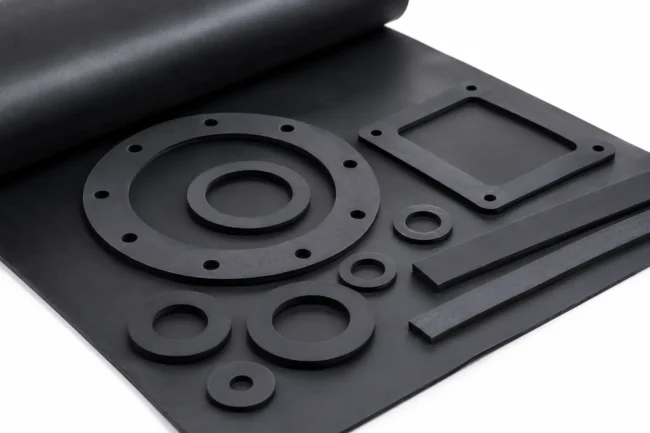
When a seal has to cope with heat, oil and fuel at the same time, most rubbers give up. Nitrile swells or hardens in the heat, EPDM swells in oil, and silicone does not like fuel. Viton is the rubber engineers turn to when the others cannot cope.
It costs more than general-purpose rubbers, so it is worth knowing exactly what it does well, where it falls short, and when you really need it.
The short answer
Viton is a brand of FKM, a fluorine-based synthetic rubber. All Viton is FKM, but not all FKM is Viton.
It is best for sealing oil, fuel and many chemicals at high temperatures, up to about +200°C for continuous use.
It is not for glycol brake fluid, ketones such as acetone, ammonia, or very cold conditions in standard grades.
Choose nitrile instead if there is oil but no high heat, as it does the job for far less money.
This guide explains what Viton is, how it compares with nitrile, and how to choose the right Viton gaskets, sheet or strip for your job.
Are Viton and FKM the same?
Almost, but not quite.
FKM is the standard name for the whole family of fluorine-based rubbers, set out in the ASTM D1418 rubber naming standard. In some European documents you may also see it called FPM.
Viton is a brand name. It is a trademark of The Chemours Company, which took over the brand from DuPont. DuPont introduced Viton in 1957 to meet the needs of the aerospace industry. Other companies also make FKM under their own names.
Because Viton was the first and best-known FKM, people often use “Viton” to mean any FKM rubber, in the same way people say “Hoover” for any vacuum cleaner. So when you see “FKM Viton”, “Viton (FKM)” or “fluoroelastomer”, they usually mean the same type of material.
Worth knowing: If your drawing or specification says “genuine Viton”, you need the branded material, not just any FKM. If it simply says FKM or fluoroelastomer, a suitable FKM grade will usually meet it. If you are unsure, send us the specification and we will check.
What is Viton good at?
Viton’s strength comes from fluorine. The fluorine in its structure makes it far more resistant to heat and chemicals than ordinary rubbers. According to Chemours’s distributor, Viton resists a wider range of fluids and chemicals than non-fluorinated rubbers.
In practice, Viton is chosen for:
- High heat. Viton keeps sealing at temperatures that would harden nitrile or neoprene. Chemours lists several of its grades for sealing up to 204°C in continuous use. Some grades can cope with higher temperatures for short periods.
- Oils and fuels. Mineral oils, lubricants, petrol, diesel and many hydraulic oils have very little effect on it, even when hot.
- Many chemicals and acids. It resists a wide range of acids and solvents, which is why it is used in chemical processing.
- Weather, ozone and sunlight. Unlike nitrile, Viton does not crack outdoors.
- Low compression set. It holds its shape and keeps pushing back under long-term squeeze, even when hot, so gaskets keep sealing for longer.
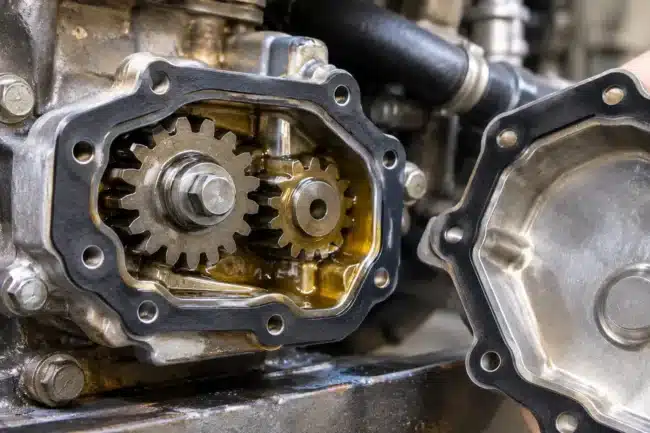
When Viton is not the right choice
Viton is not a cure-all, and choosing it for the wrong job wastes money or causes early failure. Sealing specialist Apple Rubber advises against fluorocarbon rubbers for ketones, amines and Skydrol fluids, among others.
Avoid standard Viton grades for:
- Glycol-based brake fluid. Use EPDM instead.
- Ketones and some solvents, such as acetone and MEK, which make Viton swell.
- Amines and ammonia, including ammonia refrigerants.
- Phosphate ester hydraulic fluids, such as Skydrol used in aircraft.
- Hot water and steam. Standard grades are not the best choice. Special peroxide-cured grades handle steam much better, so ask before you order.
- Very cold conditions. Standard grades start to stiffen at around -15°C to -20°C. Low-temperature grades go further.
- Rubbing and wear. Nitrile and polyurethane are tough against wear and cost far less, so they are often the better choice for rubbing parts where there is no high heat.
For a full step-by-step method, see our guide on how to choose gasket material.
Types and grades of Viton
Not all Viton is the same. The main difference between grades is how much fluorine they contain. More fluorine gives better resistance to fuels and chemicals, but makes the rubber stiffer in the cold. Chemours’s figures for its standard and special types show the trade-off:
- Type A (about 66% fluorine): the general-purpose grade, with the best compression set. Good for oils, fuels and general sealing.
- Type B (about 68% fluorine): better resistance to fuels and chemicals than Type A, with a small loss of cold flexibility.
- Type F (about 70% fluorine): the best fuel and fluid resistance of the standard grades, but the least flexible in the cold.
- GLT (about 64% fluorine): a low-temperature grade. In Chemours’s low-temperature flexibility test it reaches about -30°C, compared with about -17°C for Type A.
- GFLT (about 67% fluorine): combines good fluid resistance with better cold flexibility.
- Extreme (ETP): a specialist grade for chemicals that attack ordinary Viton, such as amines and strong bases.
For most cut gaskets and seals, a standard Type A or Type B sheet does the job. ASG supplies solid Viton rubber in both types, plus FDA-approved grades in blue or white for food and pharmaceutical use. If your fluid is unusual or the conditions are severe, send us the details so we can check the right grade.
Viton vs nitrile: which should you choose?
Nitrile and Viton are both oil-resistant rubbers, so they are often compared. The simple rule: nitrile for oil at normal temperatures, Viton for oil and fuel when it gets hot or aggressive.
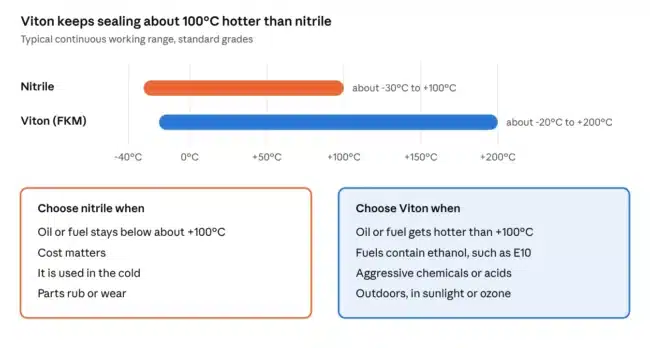
The main differences:
- Temperature. Nitrile works from about -30°C to +100°C. Viton handles about +200°C in continuous use, roughly 100°C more.
- Oils and fuels. Both resist mineral oil and standard fuels well at normal temperatures. Viton keeps its resistance when hot and copes better with ethanol fuels such as E10, which can be harder on standard nitrile.
- Weather and ozone. Nitrile cracks in sunlight and ozone. Viton resists both.
- Cold. Nitrile stays flexible at lower temperatures than standard Viton.
- Wear. Nitrile is tough and hard-wearing for rubbing parts.
- Cost. Nitrile costs much less, so it is the sensible choice when heat and aggressive fluids are not a problem.
ASG supplies both. Compare our solid nitrile rubber with solid Viton, or read EPDM vs neoprene vs nitrile rubber for the other common rubbers.
Solid Viton vs Viton sponge
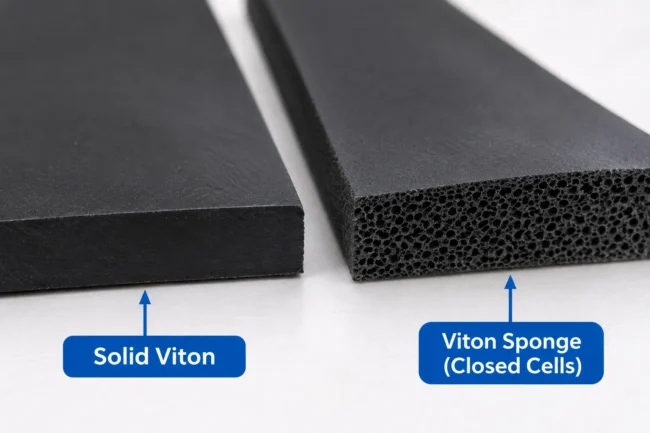
Viton comes in two main forms, and the right one depends on how much force is available to squeeze the seal.
Solid Viton is dense and firm. It suits bolted joints and covers where the seal must hold back oil, fuel or chemicals, and where there is enough bolt load to compress it. ASG supplies solid Viton rubber from 0.5mm thick, in black as standard and in blue or white FDA grades.
Viton sponge is a closed-cell, expanded version with a skin on both faces for extra tear resistance. It squashes easily, so it seals with much less force. That makes it ideal for lids, enclosures and engine-bay panels that face heat and fuel vapour but cannot be bolted tight. ASG’s Viton sponge is rated from -25°C to +204°C and is made from 3.18mm to 19.05mm thick.
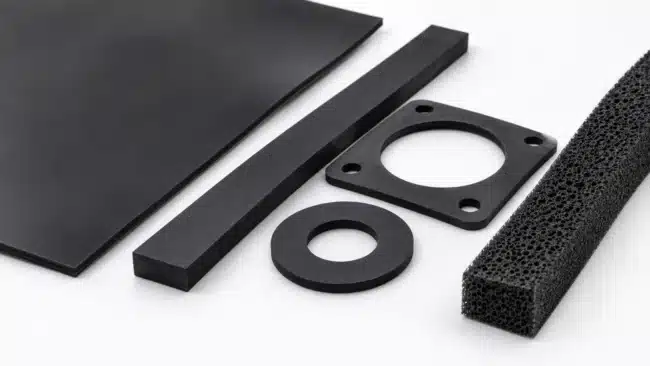
Viton forms you can order
Most Viton jobs start with one of these forms:
- Viton sheet for cutting your own parts. If you are looking for Viton sheet gasket material or Viton rubber sheeting by the metre, this is the place to start.
- Viton rubber strips for edge seals, linings and wear strips, available plain or self-adhesive.
- Viton gaskets cut to your drawing, from single prototypes to large runs.
- Viton washers for fuel and oil fittings.
- Viton pads and Viton rolls for larger areas.
- Viton sponge as sheets, strip and washers.
Where Viton is used
Viton was developed for aerospace, and it is now used wherever heat meets oil, fuel or chemicals:
- Automotive: fuel system seals, engine and gearbox gaskets, and engine-bay sealing
- Aerospace and defence: seals that must meet strict specifications and cope with fuels and hydraulic oils
- Energy: pumps, valves and equipment exposed to hot oil and chemicals
- Chemical processing: gaskets for tanks, pipe joints and pumps handling acids and solvents
- Food and pharmaceutical: FDA grades for seals that face animal fats, oils and acids
- General engineering: hydraulic and lubrication systems running hot
See all the sectors we supply.
How to order Viton gaskets and seals
Viton is a premium material, so getting the specification right first time saves money. When you ask for a quote, tell us:
- What the seal will touch, including the exact fluid or fuel and any cleaning chemicals.
- The temperature range, including the normal running temperature, the highest peak and the lowest temperature.
- The pressure, and whether the seal is bolted, clamped or simply closed like a lid.
- Any specification or approval, such as “genuine Viton”, an FDA grade or a customer standard.
- Size and quantity. Send a drawing (DXF or PDF) or a sample, with the thickness you need.
We cut Viton parts in-house using waterjet cutting, CNC presses and adhesive lamination for self-adhesive backing, from a small sample batch to multi-thousand-piece runs.
Tip: If Viton seems expensive for a large part, ask whether a sponge or thinner gasket would do the job. Using less material can bring the cost down without losing performance.
Frequently asked questions
Is Viton the same as FKM?
Viton is a brand of FKM. FKM is the general name for fluorine-based rubbers, and Viton is the trademark of The Chemours Company. All Viton is FKM, but not all FKM is Viton.
What temperature can Viton handle?
Standard grades work up to about +200°C in continuous use, and some grades can cope with higher temperatures for short periods. At the cold end, standard grades start to stiffen at about -15°C to -20°C, while low-temperature grades go further.
Is Viton better than nitrile?
Not always. Viton is better for high heat, aggressive fuels and outdoor use. Nitrile is better value for oil at normal temperatures, more flexible in the cold and tough against wear.
Is Viton food safe?
Standard black Viton is not intended for food contact. FDA-approved Viton grades, usually blue or white, are made for food and pharmaceutical use.
Can Viton be used with brake fluid?
Not with glycol-based brake fluid, which damages it. EPDM is the usual choice for glycol brake fluid.
Why is Viton more expensive than other rubbers?
The fluorine-based raw materials and more complex processing cost more. You are paying for heat and chemical resistance that cheaper rubbers cannot match, so it is best used where those properties are really needed.
What is Viton rubber used for?
Viton (FKM) rubber is used for gaskets, seals and O-rings that must resist heat, fuels, oils and harsh chemicals.
Can you cut Viton gaskets to my drawing?
Yes. Send us your drawing or sample with the grade, thickness and quantity, and we will cut them in-house, from one-offs to volume runs.
Looking for Viton rubber sheet suppliers?
Advanced Seals and Gaskets supplies Viton as full sheets and rolls, and as finished parts cut to your drawing: Viton rubber gaskets, seals, washers, strips and sponge components.
Not sure whether you need Viton, nitrile or another material? Our team will recommend the right grade for your fluid and temperature. Contact us or call +44 (0)1384 252555.